

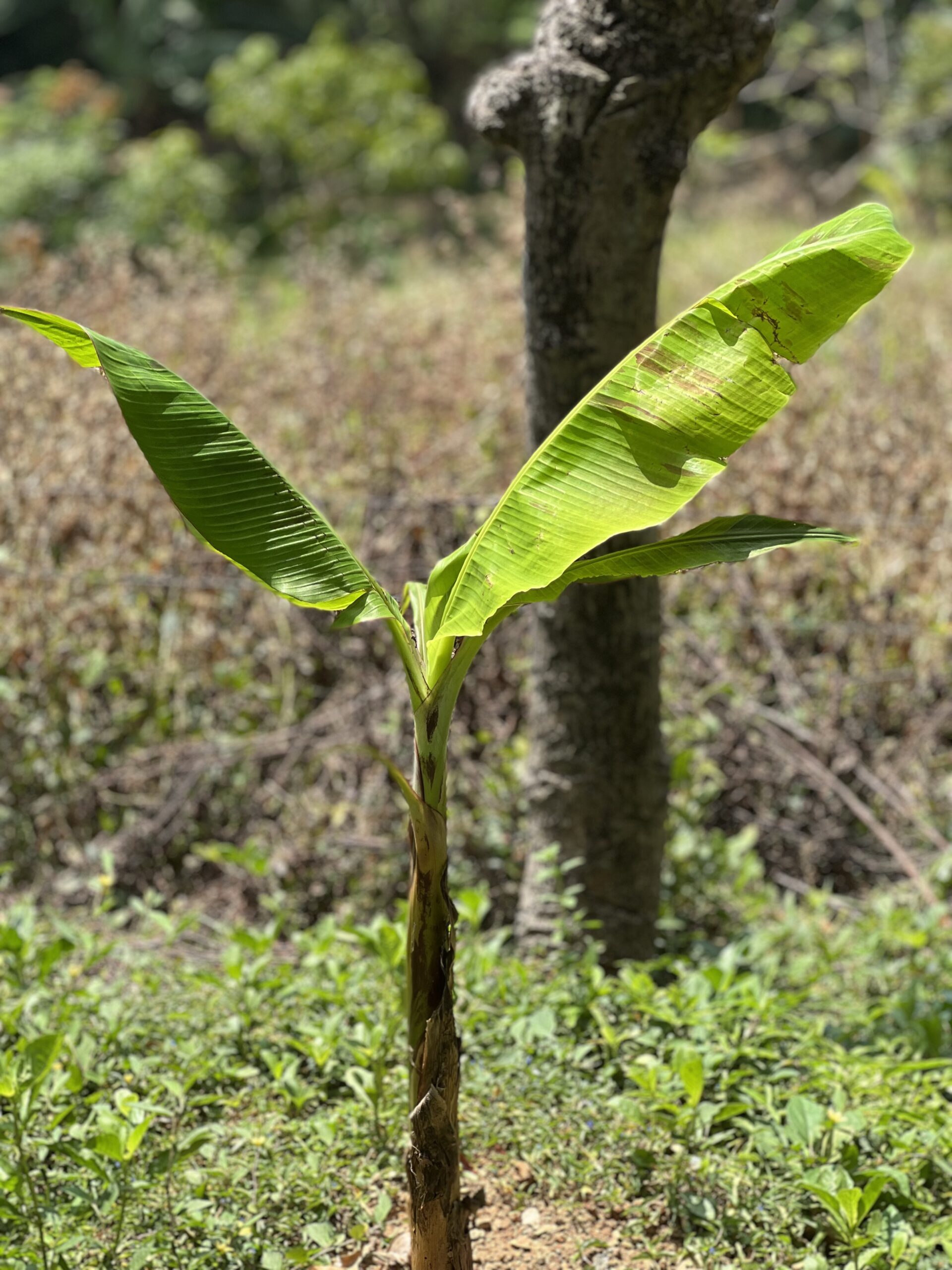
Agriculture is done among trees and palms in the bottom of the jungle in tropical areas. Join us on the journey together with Rotary into a village on Roatan that received trees and hope for the future!

The sun shone from a bright blue sky on villagers who had gathered along the wall of the sports field in Juticalpa on the island of Roatan. They were waiting in anticipation. Beside them the 150 small trees were sorted and lined up ready to be handed out and later planted by their new owners. Primarily they were breadfruit, but also included avocado, mango, and guava.

AGROFORESTRY
In tropical areas, agriculture and cultivated land are only found in jungle forests. Here, fruit and vegetables are grown amongst the diversity of the jungle and not in dedicated agricultural areas as most western countries do. This means that most families either own a jungle patch or are allowed to cultivate on another person’s land for their own needs and sell what is left over. This method is called agroforestry.
Roatan used to be largely self-sufficient in food. Over time, much of this forest was used to make wood materials and areas were cleared for building houses. Much of what was cultivated land was cleared for the benefit of buildings and infrastructure. In addition, the influx of poor people from mainland Honduras who were trying to get a job in the tourism industry increased drastically, which in turn required a lot of housing space.Then came the pandemic with its closing of the country’s borders and curfews. This resulted in no tourism and unemployment on a great scale. Most of Roatan’s population were not eligible for any form of economical benefits. The result was food shortages on the island.
LONG TERM SOLUTIONS
The Rotary Club of Roatan contributed to the continuous “firefighting” by, among other things, delivering food bags to many of the families who could not afford to feed themselves. The experience from the pandemic reinforced the need to invest in a long-term solution. Therefore, the Rotary Club of Roatan was happy to coordinate a project financially sponsored by White River Junction Rotary Club, Windsor, Vermont, USA. They have, in collaboration with the organisation “Support Roatan”, stepped in to contribute plants and knowledge about agroforestry. The result will be to increase food security for those who have little to low incomes.
The local coordinator for the project is Angela Claire Bjorøy-Karlsen, who is the Environmental Chair in the Rotary Club of Roatan and therefore responsible for the environmental focus of their club. She follows up on deliveries of plants and trees as well as offering training as needed.
SUPERFOOD
One of the most important trees that was handed out this time were breadfruit trees. It originates from New Guinea, the Maluku Islands, and the Philippines, but has then spread geographically throughout the colonial period.The reason for it being the main focus is because breadfruit is extremely healthy, rich in minerals, vitamins, omega and carbohydrates while low in fat.
A tree can help feed a family for up to 50 years and one can harvest up to 300 fruits or somewhere around 680 kg per year from a mature tree. It tastes almost like potatoes, but can also be reminiscent of freshly baked bread. In Central America and the Caribbean, it is often served as a bacalao consisting of salted cod, olive oil and onions. The most common, however, is that they will make flour from the fruit and use it to bake bread.
INTERNATIONAL DOOR OPENER
A few weeks after the trees had been given to the villagers, representatives from The Rotary Club of White River Junction visited Juticalpa. The club President Carson Hutchinson Wenz and the club’s International Chair, Jan Hebert were given a thorough tour of one of the hamlets, appropriately guided by the head of the Juticalpa water board Henry Zelaya.
“We are here to get to know the recipients of the trees and see that they actually plant them and use them”, says Hebert.
“Participating in this project is a door opener in many ways to increased international cooperation for our club,” adds President Wenz.
And the North American guests were pleased with what they saw as they walked up and down the steep, jungle-clad hillsides between clay buildings with tin roofs, homemade ovens for cooking, dogs that were barking continuously, pigs that were rolling in the mud, and chickens that ran around the yards.
Also evident were hard-working women who made, among other things, coconut oil. Every family they met had planted the trees and proudly displayed them.
Angela told the group along the way that it takes approximately 3 years before the trees bear fruit.

TREES FOR THE FUTURE
The local Juan Lindo school has also received trees for planting. The Principal Carlos informed us that they will plant the trees the week after our visit.
“We contribute trees and understanding to the schools as a long-term investment among the young people, so that they can learn to take care of the tree, pruning and ensuring that trees deliver an optimal amount of usable fruit in years to come.
And the whole point is that the families should be self-sufficient in basic food sources in the future,” says Angela.
She plans to follow this up when the trees have been growing for a few years.